https://drpaulward.com/exploring-is-my-word-for-the-year/

Exploring

During my recent visit to the Modern Elder Academy in Santa Fe, New Mexico, our cohort discussed the Exploratorium®, which is “a public learning laboratory where you can explore the world through science, art, and human perception.” Our continuing explorations led me to select “exploring” as my word for the year. My intention for the year is to continue exploring the world of conscious leadership, conscious living, and conscious aging through research, writing, and conversations that matter.

Connecting was my word for the past year and I am grateful for the connections that emerged, strengthened, and flourished throughout the year. My intention, to meet people in person wherever possible, has resulted in wonderful relationships that have often built on long term virtual connections. To my connections who supported my connecting intention, thank you! I am grateful for past, present, and future connections. My intention is to continue the focus on connecting, in person and online, during the coming year.  

Exploring the world through science, art, and human perception is like viewing reality through a prism, each facet revealing something different. So says, my trusty Copilot. Patterns in our fields of interest can be revealed through social sciences research. Art in its many forms invites us to translate those patterns and our own experiences into color, sound, and story. Weaving the science and art together provides the opportunity to view the world through the unique lens of our senses, emotions, and imagination. This year, exploring the world independently and in collaboration with others may reveal new directions for research, writing, and the convening of conversation circles in person and online.

If any of my reflections or my word-for-the-year have sparked ideas for connection and collaboration, please connect and let’s start a conversation.  

And in the words of one of my favorite teachers, Michael Neill, have fun, learn heaps, and happy exploring!

Chip Conley and Paul Ward at the Modern Elder Academy

Becoming a Mentern

I recently visited the Modern Elder Academy, the world’s first midlife wisdom school, in Santa Fe, New Mexico. Chip Conley is the inspirational founder of the Modern Elder Academy and wrote the foreword for our book, Midlife New Life, that he is holding in this picture taken at the Rising Circle Ranch during the workshop.

The five-day workshop at the Modern Elder Academy was about mastering the art of mutual mentorship. It was led by Chip Conley, along with Marc Freedman, founder of CoGenerate. Their teaching, stories, examples, exercises, and profound wisdom about life transitions and about working, living, and educating across generations was all-absorbing and I am still overflowing with new knowledge and ideas for the future.

Having graduated from the mutual mentoring program as an aspiring Modern Elder, I am excited to see what is emerging. Chip Conley believes that “modern elders are interns as much as mentors” and has coined the term Menterns. Coming together to learn from each other, regardless of age, enables intergenerational collaboration that may require a significant mindset shift. I invite you to learn with me about the possibilities of being a Mentern.

Article originally posted on the drpaulward.com website, November 21, 2025

Loneliness Week 2025 https://drpaulward.com/time-to-connect-and-reflect/

Time to Connect and Reflect

Reach Out, Connect is the theme for Loneliness Awareness Week 2025 and is about fostering empathy and building a more connected society. It’s a chance to reflect on our own relationships and consider how we can support others who may be feeling isolated.

Inspired and hosted by The Marmalade Trust, this Loneliness Awareness Week is a vital campaign dedicated to raising awareness about loneliness and its impact on our mental and physical well-being. You may have participated in Random Acts of Connection during the 2024 campaign, which reached 638,000 people across the UK and globally on social media.

In today’s fast-paced, digitally connected world, it’s easy to assume that loneliness is rare. Yet, millions of people—regardless of age, background, or lifestyle—experience it. Whether it’s a fleeting feeling or a long-term struggle, loneliness can affect anyone. Loneliness Awareness Week encourages open conversations about loneliness, helping to break the stigma and normalize the experience as a natural part of being human. This week of awareness serves as a reminder that feeling lonely doesn’t mean something is wrong with you; it simply means you need more meaningful social connection.

In a previous blog post, I wrote about the Loneliness Pandemic. Loneliness Awareness Week can help bring our attention to this epidemic and notice what is going on. Our Conscious Living approach embraces the three themes of noticing what is going on, setting intention, and acting responsibly, or more simply Attention, Intention, and Action (A-I-A). Raising our awareness of loneliness is an important step towards setting an intention and taking action.

During our conversation circles, we explore questions such as, What are you noticing? Where is your attention? What is your intention for helping humanity? What actions will you take to contribute to making the world a better place to live and work? Each of our conversation circles serves as a special community, fostering wonderful interactions and building connections that often develop into lasting friendships. These places are for deep conversations – places for listening, learning, sharing, and reducing loneliness.

Loneliness Awareness Week emphasizes the power of small actions—like checking in on a friend, starting a conversation with a neighbor, or joining a local group. These simple gestures can make a profound difference in someone’s life, including your own. Our conversation circles on Zoom make a difference in people’s lives every week. If you are looking for connection and community, and you are curious about these circles, visit our Conscious Conversation Circles web page or send an email to me at paulw@drpaulward.com.

This article was first published on: https://drpaulward.com/time-to-connect-and-reflect/

Giraffes in Conversation

Our Loneliness Epidemic

“Loneliness and isolation represent profound threats to our health and well-being.” So wrote U.S. surgeon general Vivek Murthy in his Advisory on the Healing Effects of Social Connection and Community. Loneliness and isolation can be detrimental to our mental, physical, spiritual, and social health and many people crave connection and community.

Loneliness is a feeling of sadness or distress about being alone, often involving a lack of meaningful connection or companionship. Isolation, on the other hand, is more of an objective state where an individual has minimal contact with others due to various reasons such as living alone, physical disabilities, or social circumstances. Isolation or solitude may lead to a feeling of loneliness, but not always. Not everyone is seeking meaningful or close relationships or a sense of belonging, but many people feel lonely.

Numerous local and global initiatives are focused on addressing this loneliness epidemic. The Global Initiative on Loneliness and Connection (GILC) brings together national organizations committed to ending the pressing global issues of loneliness and social isolation, supporting the dissemination of system-wide, national approaches to build social connection.

In her book, The Art and Science of Connection, and her TED talk, Why Social Health is Key to Happiness and Longevity, Kasley Killam explains the importance of social health and introduces her 5-3-1 guideline: Five different people per week. Three close relationships overall. One hour of quality interaction each day. Simple but valuable guidance!

In a previous blog post, The Third Place, I wrote about our conversation circles: Each circle serves as a special community, fostering wonderful interactions and building connections that often develop into lasting friendships with people we may never meet in person. These virtual third places are for deep conversations – places for listening, learning, sharing, and improving our social wellness. If you are looking for connection and community, and you are curious about these circles, visit the Conscious Conversation Circles web page or email me at paulw@drpaulward.com. Do yourself a favor and improve your social health today. Join a conversation circle.

The Power of Connection

The Power of Connection

Connecting is my word for the new year. In our fast-paced, digital world, the concept of connecting has taken on new meanings. While technology has made it easier than ever to stay in touch, the essence of true connection goes beyond just being linked by a device. It’s about deeply connecting and forming meaningful relationships, with understanding and empathy.

Beyond technology, the power of connection is in connecting first with ourselves, and then with others and the world around us. Taking time for self-reflection, mindfulness, and self-care is important. Understanding our own needs, desires, and emotions allows us to connect more authentically with others. Take a purposeful pause and practice mindfulness, meditation, contemplation, prayer, or a quiet reflection. You may also take time to foster a relationship with a higher power or the God of your own understanding.

At its core, connecting with others is a fundamental human need. It’s about sharing experiences, thoughts, emotions, and wisdom. Whether it’s a deep conversation with a friend, a shared laugh with a colleague, or a comforting hug from a loved one, these moments of connection enrich our lives and provide a sense of belonging. Maybe we can be of service to others, helping, giving, or mentoring. Conversation Circles provide a wonderful platform for connecting with others and deepening our collective and individual friendships. These connections can have a positive impact on our mental and social health.

Connecting with our environment is about fostering a deep appreciation and respect for our natural surroundings. Spending time outdoors, whether it’s a walk in the park or a hike in the mountains, can rejuvenate our minds and bodies and can have way of grounding us, reminding us of the larger world beyond our daily routines. Connecting with nature allows us to observe and experience the beauty and complexity of our planet’s ecosystems, and to develop a sense of responsibility to protect and preserve them. Simple actions like reducing waste, conserving water, and supporting sustainable practices can make a significant impact. This connection with our environment also promotes mental well-being, reducing stress and enhancing mindfulness. Ultimately, connecting with the environment enriches our lives and contributes to a healthier planet.

Connection in these different ways is essential for a fulfilling life. By nurturing our relationships with ourselves and others, embracing the digital world mindfully, and consciously connecting with our different environments, we can create a more connected and meaningful existence. So, take a moment today to reach out, reflect, and connect. Experience the power of connection. Your life will be richer for it.

Article also posted at DrPaulWard: https://drpaulward.com/connecting/

Helping Humanity - Habitat for Humanity

Helping Humanity

Helping Humanity is the title of one of the chapters in our book, Midlife, New Life: Living Consciously in Midlife and Beyond. In the chapter, we explore environmental sustainability, social responsibility, and leadership in governments and business, and consider how we can each contribute to making the world a better place to live and work. In our communities, we practice helping humanity in many ways including financial contributions to important humanitarian causes.

I host Conscious Conversation Circles including a monthly Conscious Leadership Mastermind, a bi-monthly Midlife New Life Wisdom Exchange, and open drop-in groups for people seeking deeper exploration of member-selected topics. We contribute a significant percentage of our conversation circle membership fees to humanitarian causes selected by participants. During the past year, members selected Habitat for Humanity and Feeding America for our contributions to helping humanity.

Our Conscious Living approach embraces the three themes of noticing what is going on, setting intention, and acting responsibly, or more simply Attention, Intention, and Action (A-I-A). For a recent conversation circle, we explored the question, “What humanitarian causes inspire you to action?” So many good causes need our attention and we can all contribute. What are you noticing and where is your attention? What is your intention for helping humanity? What actions will you take to contribute to making the world a better place to live and work?

Article also posted on: https://drpaulward.com/helping-humanity/

Conversation Circle on Zoom

The Third Place

If our first place is our home and the people we live with and the second place is the workplace where some of us spend most of our time, where is our third place? The original concept of the third place has been attributed to Ray Oldenburg who shared his research on the 1989 edition of The Great Good Place. These third places are our social spaces where we spend time away from home and work. In Oldenberg’s original research, third places were physical spaces where people met to socialize, make friends, and build relationships such as Rotary Clubs, church communities, libraries, parks, cafés and bars, among other friendly places. More recently, virtual spaces such as social media and live video conferencing platforms have taken the place of many of these physical places.

I am grateful to the members of my Renaissance Conversation Circle for the inspiration for this blog post. We are small group, now into our fourth year, meeting twice a month on Zoom. Some members attend nearly every session, others join when they can; new members are welcomed and, if they find a home in our circle, become regular participants. We select a topic and someone to be the conversation starter. Sessions are hosted and self-managed with some basic agreements rather than actively facilitated. We create space for deep conversations, exploring topics of common interest, sharing wisdom and experience, and supporting each other on journeys of collaboration and transformation.

I also host themed conversation circles and mastermind groups. Six-month programs of twelve 75-minute sessions allow a deep dive into the chapters of our Midlife, New Life book. An ongoing Conscious Leadership Mastermind group has an international flavor, and we explore the different principles and practices of conscious leadership in organizations and the wider world. The focus of these discussion groups is on inquiry and shared experiences rather than advising or advocating for personal strongly held positions and are shaped by relationships that are neither invasive nor evasive. Each circle serves as a special community, fostering wonderful interactions and building connections that often develop into lasting friendships with people we may never meet in person.

These virtual third places are for deep conversations – places for listening, learning, sharing, and improving our social wellness. If you are looking for connection and community, and these circles have piqued your interest, send me an email at info@2young2retire.com. Do yourself a favor and find a new third place today.

Article also posted at: https://drpaulward.com/blog/

Solo Aging

An increasing number of people in later life are living alone. Solo aging, or solo living as we described it in our book, Midlife, New Life, may be a matter of choice or perhaps due to a change in personal circumstances resulting from the loss of a partner or another life-changing event. In the United States, more than 28% of the over 65’s, that’s nearly 14 million people, are living alone by choice or circumstance. This percentage has doubled in the past 60 years.

Sara Zeff Geber, author of Essential Retirement Planning for Solo Agers, was the guest on a recent Global PIONeer 50/50 Online Conversation hosted by the Pass It On Network. We discussed the challenges of solo aging, including loneliness and isolation and concerns around who will take care of us and give us advice, especially when we are in a crisis or medical emergency. This is especially the case if you have no family safety net. Aging in the right place, the benefits of home sharing, and the importance of intergenerational connections and social networks were among the topics discussed.

At 2Young2Retire, we host regular conversation circles, mostly on Zoom. Some of our participants are living alone, and the conversation circles provide valuable connections helping to overcome some of the challenges of loneliness and isolation for solo agers. We create space for wonderful conversations, explore topics of shared interest, share wisdom and experience, and support each other on journeys of collaboration and transformation. For more information about these conversation circles, go to the Conscious Conversation Circles page.

Are you working for fulfillment or working for a living?

Working for Fulfillment

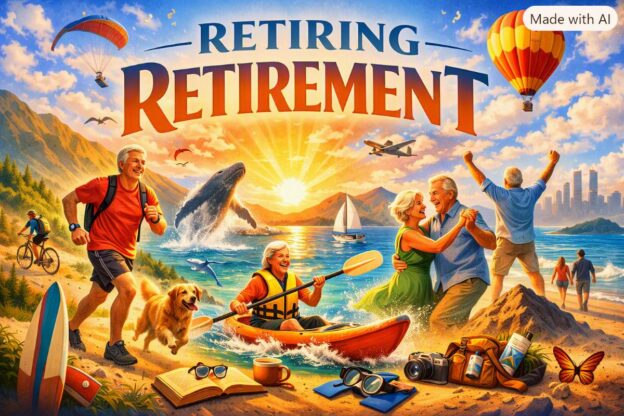
Are you working for fulfillment or working for a living? As we journey through midlife and beyond, work life transitions may be forced upon us due to the loss of a job, unexpected health issues, or family caring responsibilities. Alternatively, we may be ready to consider retirement from long term careers with a degree of financial security that allows us to shift from making a living to making a life. Wherever we are on this midlife journey, this can be a time for making conscious choices about our work life.

In our Midlife New Life Conversation Circle Mastermind program, we are approaching these important topics. Working for a Living and Working for Fulfillment are two chapters of the book, Midlife New Life – Living Consciously In Midlife and Beyond, that we are exploring in these virtual gatherings. We are living longer and working longer than previous generations. Can we begin to focus on working because we want to rather than working because we have to? Can we think of retirement as freedom to work rather than freedom from work?

Many of us have to work to pay the bills but maybe now is the time to develop a roadmap for the future, for working because we want to in midlife and later life. Begin to explore opportunities for encore careers in similar or different fields, entrepreneurial ventures, or volunteering. Entrepreneurial ventures may support doing what you want to do, doing what you can do; maybe making money and making a difference. What do you want to do? Take a moment to fantasize about appearing on the cover of a magazine: what magazine would it be, and what would the article be about? Who do you choose to be in midlife and beyond?

Living Blog Post Image

Living

Living is my word for the new year. Living is one of those words that is typically followed or preceded by other words or phrases. Although inspired by the subtitle of our upcoming book, Midlife, New Life: Living Consciously in Midlife and Beyond, many positive words and phrases can precede or follow the word living: Living Well, Living Life Creatively, and Living with Technology, are all chapters in the book; other phases that may come to mind include living space, living wage, living things, living peacefully,  living the dream, or senior living, sustainable living, purposeful living, vibrant living, working for a living, or the philosophy of living. Living from the place of surrender, living in harmony, and living in hope all connect well to my words for previous years.

Living is the active word for the verb to live or the noun life, it is about being alive. This brought to my mind the words of Howard Thurman, “Ask what makes you come alive and go do that. Because what the world needs is people who have come alive.” The new year offers new opportunities for being awake and alive, and for living intentionally.

Living is such a versatile word. What are the “living” phrases that come to your mind? How are you choosing to live? I invite you to bring attention to what you are noticing as you read this blog post and set an intention for how you will be living in the new year. Join me in living more consciously.